

Understanding Laser Eye Surgery
For millions of people worldwide, vision correction is essential for daily life. Traditionally, glasses and contact lenses have been the mainstay for correcting nearsightedness (myopia), farsightedness (hyperopia), and astigmatism. Today, laser eye surgery offers an advanced, permanent alternative.
Laser eye surgery techniques—such as LASIK, PRK, and SMILE—reshape the cornea to improve vision naturally, reducing or eliminating dependence on corrective lenses. Understanding the differences between surgery and traditional options can help you make an informed choice.
Preparing for Your Procedure
Preparation starts with knowledge and a proper medical evaluation.
1. Assessing Your Vision Needs
- Determine whether your primary goal is complete freedom from glasses or partial correction.
- Consider lifestyle factors: sports, work, hobbies, or occupational requirements.
2. Consultation with an Ophthalmologist
- Comprehensive eye exam, including corneal mapping and pupil measurement.
- Discussion of medical history, eye health, and expectations.
3. Lifestyle Preparation
- Stop wearing contact lenses 1–2 weeks before surgery (soft lenses) or longer (rigid lenses) for accurate measurements.
- Arrange transportation for post-surgery recovery.
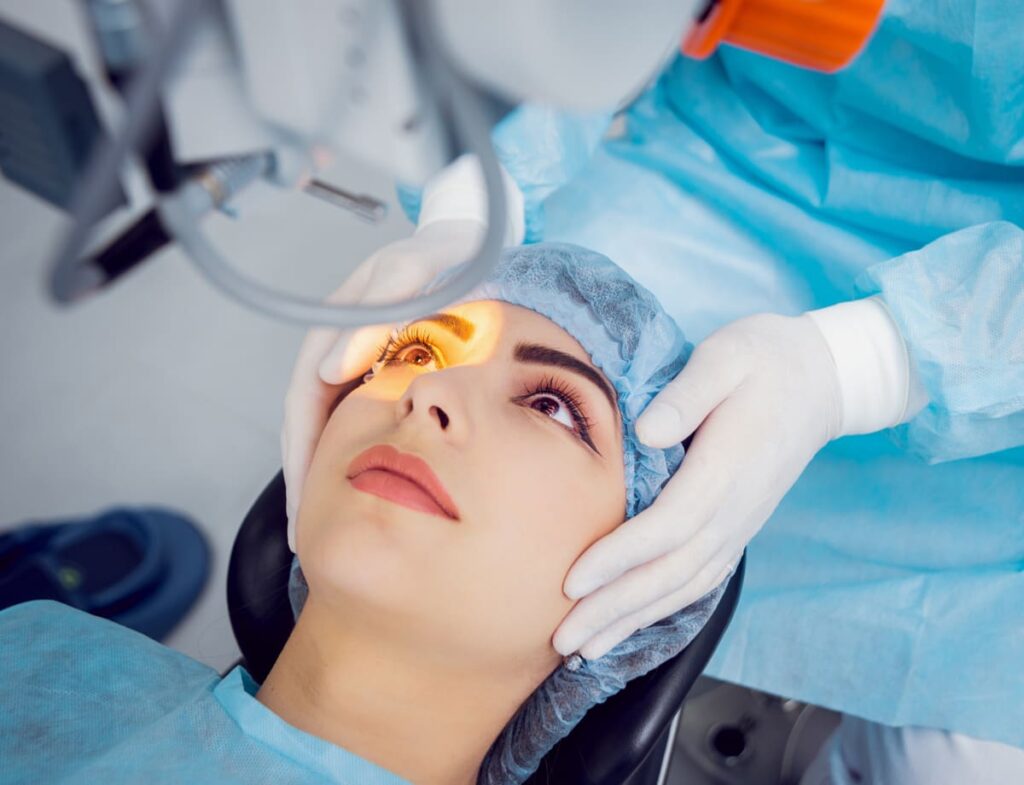
What Happens During Laser Eye Surgery
Laser eye surgery is precise, minimally invasive, and typically painless.
Step-by-Step Procedure
- Preparation
- Numbing drops and eyelid holders applied to prevent blinking.
- Procedure
- LASIK: Corneal flap creation, laser reshaping, flap repositioning.
- PRK: Surface layer removal, laser reshaping, natural corneal regeneration.
- SMILE: Small corneal incision, lenticule removal for minimal disruption.
- Duration
- Usually 15–30 minutes for both eyes.
A skilled ophthalmologist ensures precision and reduces potential complications.
Recovery and Aftercare
Recovery varies depending on technique and individual healing.
Immediate Post-Surgery
- Mild tearing, burning, or blurred vision is common.
- LASIK and SMILE patients notice improvement within 24–48 hours.
First Week
- Follow prescribed eye drops and avoid rubbing eyes.
- Avoid swimming, dusty environments, or strenuous activity.
- Attend all follow-up appointments.
First Month
- Vision clarity gradually improves.
- PRK patients may experience slower initial recovery due to corneal surface regeneration.
- Continue protection from bright light and follow care instructions.
Tip: Sunglasses help protect sensitive eyes from UV exposure during recovery.
Laser Eye Surgery vs. Lenses and Glasses
Advantages of Laser Eye Surgery
- Permanent correction: Eliminates or reduces the need for glasses/contacts.
- Convenience: No daily lens cleaning, prescription changes, or lost glasses.
- Improved quality of life: Easier participation in sports, swimming, and travel.
Advantages of Glasses and Lenses
- Non-invasive: No surgery or recovery period required.
- Flexibility: Prescription can change over time with age.
- Lower upfront cost: Glasses and contacts are generally less expensive initially.
Disadvantages of Laser Eye Surgery
- Surgical risks: dry eyes, glare, halos, minor under/over-correction.
- Recovery period and temporary lifestyle limitations.
- Higher upfront cost compared to glasses/contacts.
Disadvantages of Glasses and Lenses
- Daily maintenance required.
- Can be inconvenient for sports, swimming, and active lifestyles.
- Not a permanent solution; ongoing costs for replacement and updates.
Long-Term Benefits of Laser Eye Surgery
- Freedom from corrective devices: Most patients no longer need glasses or contacts.
- Stable vision correction: Long-lasting results, though age-related changes may still occur.
- Improved confidence and lifestyle: Many patients report enhanced comfort, convenience, and self-esteem.
Example: Sarah, a 32-year-old teacher, switched from daily contacts to LASIK. She now enjoys teaching and outdoor sports without worrying about glasses or lens care.
Risks, Benefits, and Considerations
Benefits
- Significant improvement in vision clarity.
- Reduced dependency on corrective lenses.
- High success rate for myopia, hyperopia, and astigmatism.
Risks
- Temporary dry eyes, glare, or halos.
- Minor over- or under-correction requiring enhancement.
- Rare complications like infection or flap issues (LASIK).
Minimizing Risks
- Choose an experienced ophthalmologist.
- Follow all pre- and post-operative instructions.
- Attend follow-up appointments.
- Avoid eye rubbing or risky activities during recovery.
Frequently Asked Questions (FAQ)
Is laser eye surgery safer than glasses or contacts?
Yes, surgery is safe with a qualified ophthalmologist, offering permanent correction without daily lens maintenance.
How long is recovery?
- LASIK/SMILE: 1–2 days for basic recovery.
- PRK: 3–5 days or longer for visual clarity.
Can laser surgery correct all vision problems?
Most patients with myopia, hyperopia, and astigmatism are suitable candidates, but a consultation is required.
What is the cost in Australia?
Typically $2,000–$5,000 per eye, depending on procedure and clinic.
Do I still need glasses after surgery?
Some patients may need reading glasses as they age, but dependence on corrective lenses is significantly reduced.